
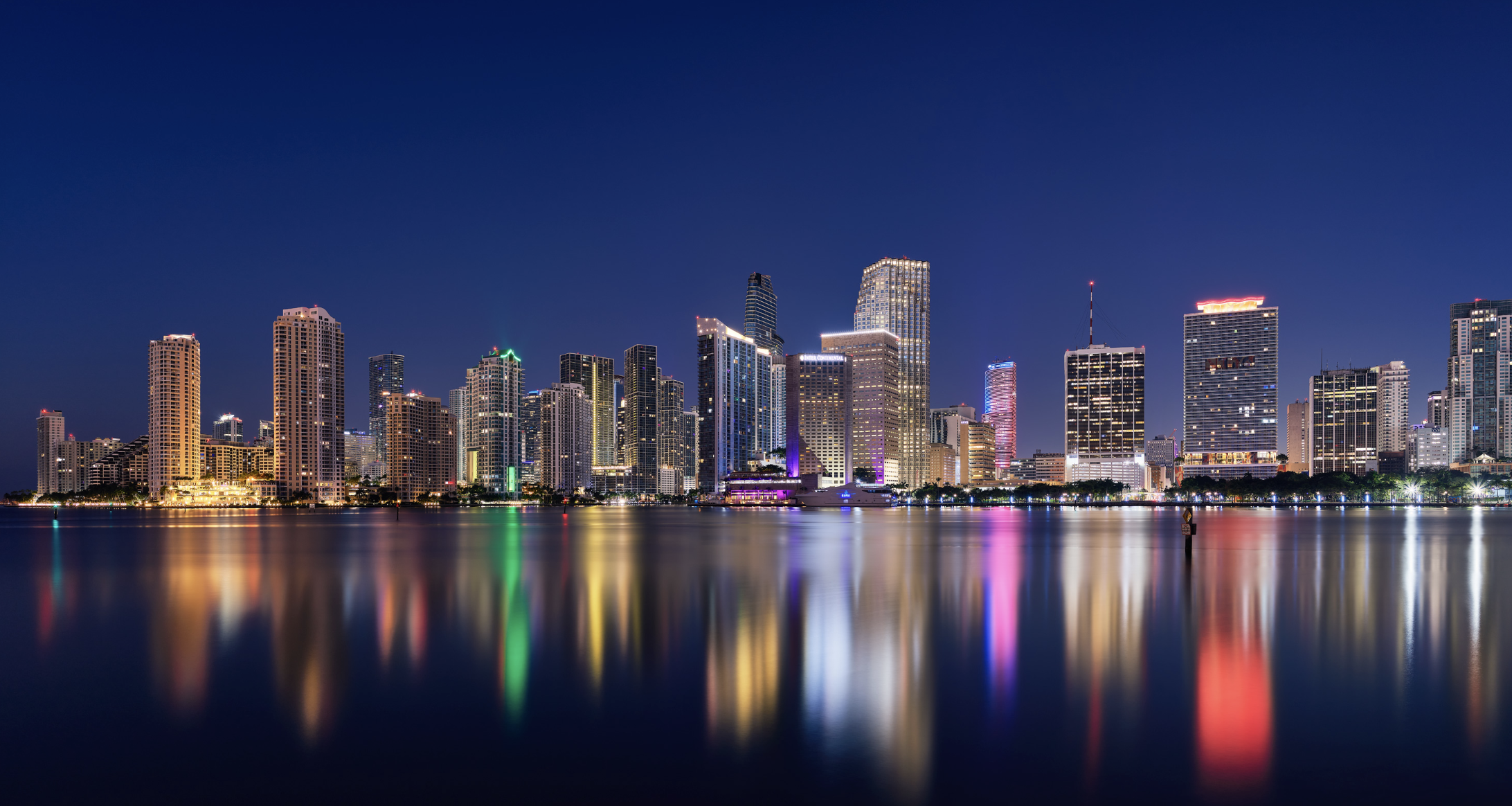
Fifteen years ago, almost nobody in serious Miami real estate conversations brought up Edgewater. It was just a quiet stretch of Biscayne Bay sitting between Downtown and Midtown, waiting for its turn.
Today, it is operating on two seemingly opposite frequencies. On one hand, condos here are selling faster than anywhere else in Miami’s urban core. On the other, 40% to 50% of active listings have cut their prices.
To anyone watching from the outside, that sounds like a contradiction. To anyone who watched Brickell mature a decade ago, it looks remarkably familiar. This is not a neighborhood falling apart—it is a high-growth market settling into its real baseline.
Where Edgewater Sits (and Why People Care)
Bounded by NE 15th Street to the south, NE 36th Street to the north, Biscayne Bay to the east, and the FEC railway tracks to the west, Edgewater sits right in the sweet spot.
You can hop on the MacArthur Causeway and reach South Beach in 15 minutes. Miami International Airport is 20 minutes west, and Bal Harbour Shops is 20 minutes north. You get front-row bay views without island isolation, which is precisely why it attracts people who actually live and work in Miami every day.
What the Numbers Are Telling Us
The speed of transactions in Edgewater has outstripped every neighboring pocket. Going into late 2025, Edgewater posted a 33% year-over-year jump in closed sales.
By early 2026, sales velocity hit another gear. Closed deals jumped 120% year-over-year in Q1 alone, outperforming every other neighborhood in the city. The demand is undeniably there—provided sellers price correctly.
Correction vs. Base: Understanding the Price Shift
To make sense of buying a condo in Miami right now, you have to separate the broad market from the luxury tier:
The Broad Market: The median ask for an Edgewater condo sits around $699,000 (~$639 per square foot), with average active inventory asking $1.20 million. Entry-level units start near $300,000, making it far more accessible than core Brickell.
The Luxury Segment: Luxury bayfront units are closing between $1,000 and $1,200 per square foot—a healthy adjustment down from the frantic $1,500 peaks seen two years ago. Top penthouses, like recent closings at Aria Reserve, still command around $1,375 per square foot.
A seller who bought in 2019 and sells today at $1,100 per square foot is still locking in massive gains, even if that unit briefly traded for $1,400 during the market frenzy. The market corrected from its peak, not its foundation.
We are also seeing a clear split in property types: boutique buildings with primary residents are holding value steadily, while massive high-rises packed with investor units face heavier price pressure.
Buyer Leverage and Pricing Realities
Right now, inventory sits between 12 and 20 months of supply. In real estate, 6 to 8 months represents a balanced market. That means buyers hold real leverage.
With nearly half of all sellers dropping their original ask, overpricing a listing today is the fastest way to sit on the market and take a steeper discount later. Real estate agent Irina Velychko frequently points out to sellers that pricing ahead of the market curve—rather than chasing it down—is what actually protects your equity in this environment.
The Policy Game-Changer: Double Density
In January 2026, Miami passed a zoning update allowing Edgewater to double its residential density from 150 to 300 units per acre, alongside parking requirement exemptions for projects using density bonuses.
The requirement? Developers pay into a dedicated city fund earmarked directly for local resilience infrastructure: pump stations, seawalls, and expanded parks along the bay.
This is the exact formula that turned Brickell into a global financial hub. The city isn't just permitting high-rises; it is forcing vertical growth to fund long-term flood defense and park networks.
The Pre-Construction Pipeline
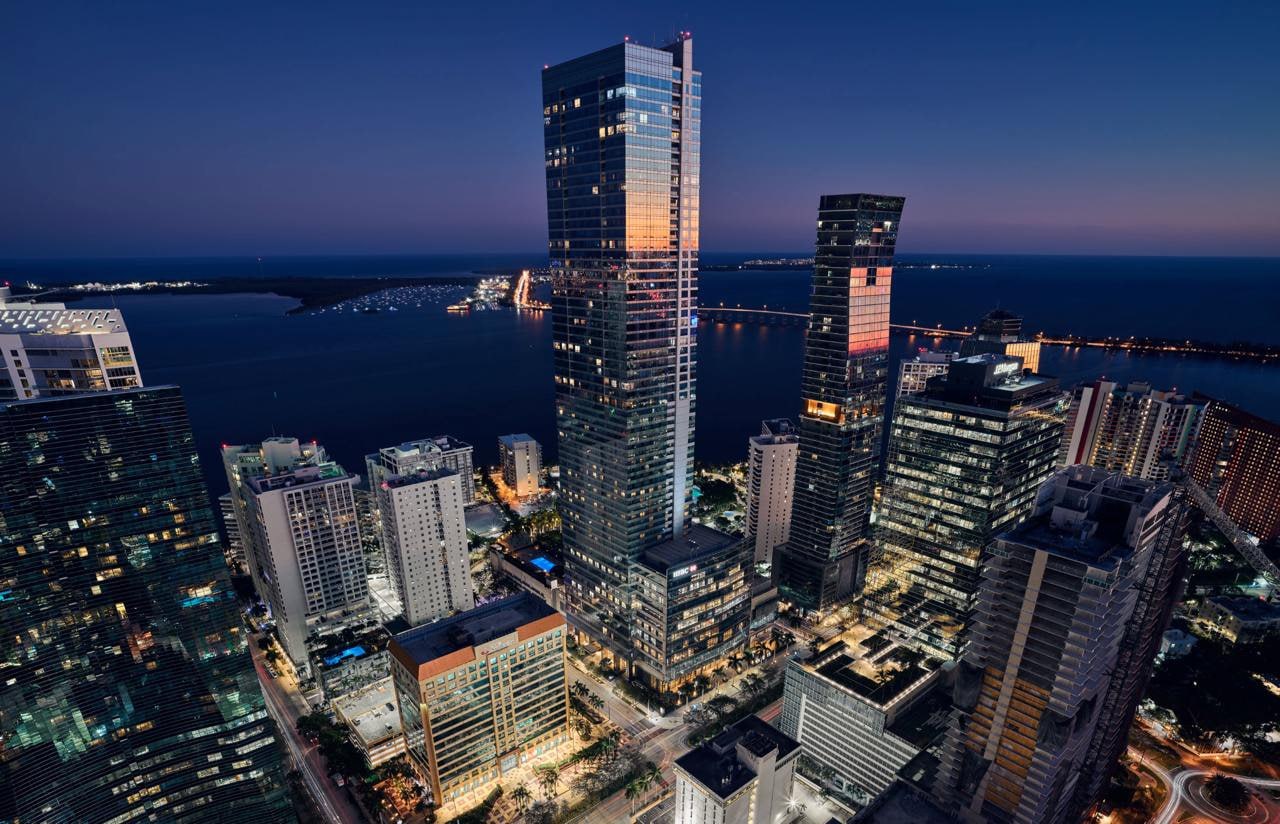
The skyline is evolving rapidly with several standout developments:
Villa Miami (710 NE 29th St): Terra’s luxury tower built in partnership with Major Food Group, offering half-floor residences.
Aria Reserve: Twin 62-story towers by Melo Group spanning over five acres of waterfront. Features 11-foot deep terraces, flow-through layouts, and flexible rental options. Units range from 1 to 4 bedrooms ($1.3M to $4.2M+), with full completion targeted for late 2026.
EDITION Residences Edgewater: A 55-story branded tower offering 45,000 square feet of private amenities, starting around $2 million.
Vida Residences: A 9-story boutique layout catering to flexible short- and long-term stays.
Edgewater vs. Brickell
While Brickell leans heavily into corporate banking, nightlife, and short-term rental towers, Edgewater was built for residential breathing room.
Price: Edgewater starts near $300k with averages around $639/sq. ft., compared to Brickell's $550–$800+/sq. ft. baseline.
Vibe: Edgewater centers around Margaret Pace Park, waterfront paths, and primary residents rather than an endless rotation of weekend tourists.
Real Risks to Watch
Supply Waves: Simultaneous building completions create temporary rental and resale competition.
HOA & Insurance: Updated Florida condo reserve laws and property insurance rates impact monthly HOA math/.
View Protection: With doubled density, verifying air rights and zoning setbacks on neighboring lots is critical before buying.
Navigating HOA health, structural reserves, and view corridors is where local guidance from Irina Velychko makes all the difference—ensuring you buy into a building with rock-solid financials.
FAQ
Is Edgewater a good place to invest in Miami real estate?
Yes. It offers direct Biscayne Bay access at lower per-square-foot prices than Brickell or South Beach. Recent zoning updates allowing higher density—coupled with mandatory city resilience funding—support strong long-term growth despite temporary inventory surges.
How much does a condo cost in Edgewater?
Entry-level one-bedroom units start around $300,000 to $400,000. Broad market medians hover around $699,000, while prime luxury waterfront residences range from $1,000 to $1,375 per square foot ($1.3M to $4M+).
What is the main difference between Edgewater and Brickell?
Brickell is a high-density financial core with heavy corporate infrastructure and short-term rental towers. Edgewater is a quieter waterfront residential neighborhood with larger parks and lower overall condo prices.